
31°C, New York


Notification products, updates
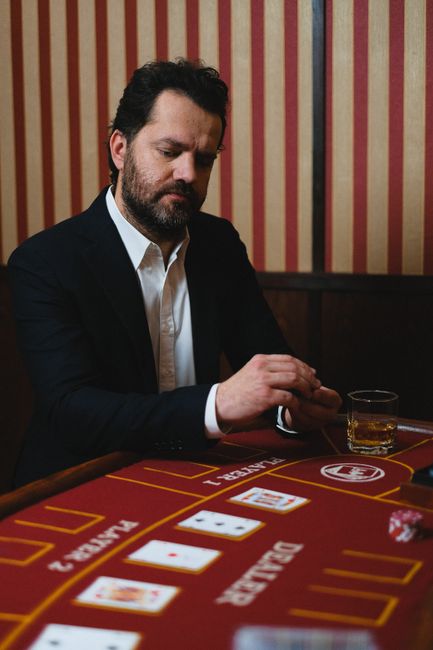
You know that feeling—the one where you're three spins away from a bonus round, or you've got pocket aces and the river just paired the board. iGaming isn't just about luck anymore. It's a full-blown ecosystem of strategy, psychology, and technology that's evolved faster than almost any other entertainment sector. Whether you're grinding micro-stakes poker, chasing a progressive jackpot, or building a same-game parlay, there's a rhythm to it. And if you don't understand that rhythm, you're just donating your bankroll to the house. So let's pull back the curtain on what actually separates the casual clicker from the player who knows when to hold, fold, spin, or cash out.
Ask any veteran and they'll tell you: slots are the great equalizer. No bluffing, no reading opponents—just you and a random number generator. But here's the catch. That simplicity is exactly why so many people bleed money without realizing it. Modern video slots aren't your granddad's three-reel mechanicals. They're intricate math models with volatility indexes, hit frequencies, and bonus buy features that can cost 100x your base bet.
Take a high-volatility slot like Money Train 3 from Relax Gaming. Its max win is 100,000x your stake, but the hit rate is brutal—think one big win every 400 to 500 spins on average. Compare that to a low-volatility game like Starburst (NetEnt), which pays small amounts frequently. Neither is "better." They serve different bankrolls and temperaments. The mistake? Playing high-volatility slots with a low-volatility budget. You'll burn out before the math has a chance to work.
Here's a concrete tip: always check the slot's RTP (Return to Player) before you spin. Anything below 96% is a red flag. And don't ignore the volatility rating—most reputable casinos publish it right on the game info screen. A 96.5% RTP with high volatility means long dry spells, but a fat tail of big wins. Know what you're signing up for.
If slots are checkers, poker is chess with a side of psychological warfare. And no, I'm not talking about the slot-style "video poker" you see in some casinos. I mean real Texas Hold'em, Omaha, or even short-deck. The game has shifted dramatically in the last decade. Solvers (like PioSolver and GTO+) have turned optimal play into a science. But here's the kicker: at low and mid stakes, exploitative play still beats GTO because your opponents aren't balanced. They call too much, bluff too little, and overvalue top pair.
Let's get specific. In a $1/$2 live cash game, the average player's VPIP (Voluntarily Put money In Pot) is around 35–40%. A winning player sits closer to 22–26%. That gap? It's discipline. Tight is right, especially from early position. But when you do play a hand, aggression pays. C-betting (continuation betting) the flop around 65–70% of the time in heads-up pots is a solid baseline. If you're checking every missed flop, you're bleeding value.
Bankroll management is the unsexy secret nobody wants to hear. The old rule: never buy into a cash game with more than 5% of your dedicated poker bankroll. For tournaments, it's 2% or less. That means if you have $1,000 set aside, you're playing $1/$2 or $0.50/$1—not $5/$10. Ego kills more bankrolls than bad beats.
Sports betting has undergone its own revolution. Gone are the days of gut-feel picks. Sharp bettors use closing line value (CLV) as their north star. If you consistently beat the closing line—the final odds before an event starts—you're likely a long-term winner, even if short-term results are choppy. That's because closing lines represent the market's most efficient estimate. Further details are available through สล็อต.
Take the NBA. A typical point spread moves 1–2 points from open to close. If you bet the Lakers -4.5 early and the line closes at -6, you got a great number. That's +1.5 points of value. Over hundreds of bets, that edge compounds. But here's what most casual bettors do: chase steam (betting after a line moves) or rely on public trends like "Team A is 7-0 against the spread on back-to-backs." That's recency bias dressed up as analysis.
Another tool: expected goals (xG) in soccer, or pace-adjusted efficiency in basketball. These aren't perfect, but they predict future performance better than raw win-loss records. A team outscoring opponents 2.1 to 1.3 in xG over five games is likely to regress positively—even if they lost three of those games. Bettors who spot that before the public do can find soft lines.
And please, for the love of your bankroll, track your bets. A simple spreadsheet with columns for date, sport, bet type, odds, stake, and result will reveal leaks you never knew you had. Maybe you're terrible at parlays but great at player props. The data doesn't lie.
Slots, poker, betting—they all share one universal truth: without bankroll discipline, you're toast. The pros don't win every session. They just lose less when they're cold. A few non-negotiable rules:
One more thing: bonuses and rakeback. Casinos and sportsbooks dangle free bets, deposit matches, and reload bonuses. These are real value, but read the terms. A 40x wagering requirement on a 100% match bonus means you need to bet the bonus amount 40 times before withdrawing. If slots contribute 100% to wagering but table games only 10%, that's a massive difference. Always check the game weighting.
iGaming is not a get-rich-quick scheme. It's entertainment with an edge if you treat it like a skill. The slots don't care about your feelings. The poker table doesn't owe you a comeback. The sportsbook won't refund your bad parlay. But if you respect the math, manage your money, and keep learning, you can be the person who lasts longer than the average player. That's the real win—not the jackpot, not the bad beat story. It's the ability to sit down, play your game, and walk away with your bankroll intact more often than not. So next time you spin, deal, or place a bet, ask yourself: is this a decision or a reaction? Choose wisely.

Fjord & Dune shares practical, down-to-earth guidance on uk coastal walks and seaside living for readers across the UK.
Stay Tuned With Updates


Leave A Comment