
31°C, New York


Notification products, updates
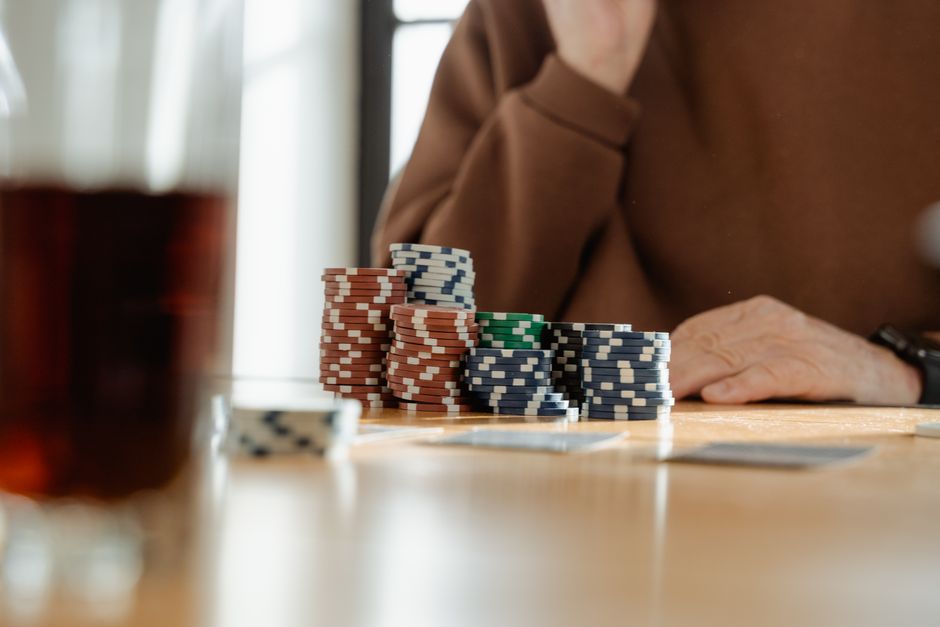
Every gambler remembers their first big win. The slot that kept paying, the parlay that hit at 40/1, the river card that completed your flush against an opponent who'd been bullying the table all night. What almost nobody remembers is the math underneath that moment — the exact probability that made it unlikely, and the bankroll decisions that made it possible. That gap between how gambling feels and how it actually works is where most players lose their money.
This isn't a lecture about quitting. It's the opposite: a working understanding of variance, house edge, and game mechanics is the single greatest upgrade you can make to your results, whatever you play.
Beginners hear "the house has a 2% edge" and shrug. Two percent sounds like nothing. But that edge isn't a one-time fee — it applies to every wager, and in fast games, you'll make hundreds of wagers per hour.
Compare two scenarios with the same theoretical edge: สล็อต goes into the finer points.
The lesson isn't "slots are bad." It's that time at the table plus wager velocity determines your exposure. A 1% edge in a game you play for ten minutes is almost irrelevant. A 5% edge in a game you grind for four hours is a mortgage payment.
Casinos make most of their floor space money from high-variance, high-velocity games — and they make it quietly. European roulette has a 2.7% edge (37 pockets, one green). American roulette doubles the green pockets and jumps to 5.26%. Same game visually, twice the bleed. Always sit at the European wheel.
Slot players often operate on a superstition: a machine that hasn't paid in a while is "due." Modern slots don't work that way. Each spin is an independent event generated by a random number generator (RNG). The RTP — typically 94% to 97% online, with some high-volatility titles dipping into the 92% range — is a long-run average across millions of spins, not a promise per session.
What does matter to your experience:
If you want more frequent small wins, pick low-volatility titles and set a stop-loss. If you're chasing jackpots, accept that 90% of sessions will end flat or down. Either is fine; ignorance of which one you're playing is not.
Poker is unique in the iGaming ecosystem: the house takes a rake (a small percentage of each pot), but you're playing against other humans, not the casino. That means — unlike slots — a skilled player can sustain a positive expected value over thousands of hands.
But "skilled" is doing a lot of work in that sentence. The modern online poker pool, especially at mid-stakes, is populated by:
If you're in group two and queuing against group three, you're the fish. The uncomfortable truth of modern poker is that the study-to-play ratio has exploded. To beat $0.25/$0.50 online, you need to understand range construction, pot odds, exploitative adjustments, and ideally run a solver on your own hands. To beat low-stakes live games, you mostly need patience and discipline — live players are generally much weaker than equivalent online stakes.
If you want to actually win at poker rather than donate, start live, start small, and track every session. Not "I think I'm up." An actual spreadsheet. The number will humble you.
Ask a hundred losing gamblers what went wrong and most will blame luck. Ask the winners and they'll talk about bankroll.
Bankroll management is simple in theory and brutal in practice:
The single biggest cause of blown accounts is chasing losses after a bad run. The math doesn't care that you're "due." It only cares what you do next.
Online casinos dangle welcome bonuses — 100% up to $500, 200 free spins, whatever — for a reason. Those bonuses come with wagering requirements, and those requirements determine whether the bonus is worth anything.
A quick framework:
Bonuses are not free money. They're discounted entertainment with a variance tax. Occasionally a low-wagering or no-wager bonus appears — those are worth grabbing.
The people who get the most out of iGaming — whether they play slots, bet the Premier League, or grind micro-stakes poker — share a common trait: they treat gambling as a cost, not an income. That mindset shift changes everything. You stop chasing, you stop lying to yourself about being up, and you start choosing games and stakes that actually fit your bankroll and your tolerance for losing.
Can you win? Absolutely. Skilled poker players and sophisticated sports bettors do it. But they win slowly, over enormous sample sizes, with strict discipline. Everyone else is buying entertainment. There's nothing wrong with that — as long as you know which side of the counter you're on.

Fjord & Dune shares practical, down-to-earth guidance on uk coastal walks and seaside living for readers across the UK.
Stay Tuned With Updates


Leave A Comment